

Recover Better, Play Better: Why Recovery Is the Missing Link in Performance
An active lifestyle—whether it includes golf, tennis, strength training, or simply staying consistently mobile—places meaningful demands on the body. Most people understand the importance of staying active. Far fewer understand the role recovery plays in sustaining that activity over time.
The difference between short-term participation and long-term performance often comes down to one thing: how well you recover.
The Why Behind Recovery
Every physical activity creates stress on the body. That stress is necessary—it’s what drives improvement. Strength, endurance, and skill all develop because the body is challenged.
But progress doesn’t happen during the activity itself. It happens afterward—when the body repairs, rebuilds, and adapts.
Without intentional recovery, that process is incomplete. Fatigue accumulates. Mobility becomes limited. Compensation patterns take over. Over time, performance declines or injury becomes inevitable.
For individuals who are driven—whether in athletics, business, or leadership—this matters even more. Recovery directly impacts energy, clarity, and the ability to perform consistently under pressure.
Recovery is not stepping away from performance. It is what allows performance to continue.
A Designed Experience, Not Disconnected Services
What often gets overlooked in wellness is integration. Too many recovery options exist in isolation—treated as occasional add-ons or luxuries rather than essential parts of a routine.
This model takes a different approach.
The recovery experience has been intentionally designed—this model has evolved through the vision and hands-on experience of CEO and Director of Athletics Cori, whose work through Kinetic Strategies has been centered on creating environments that reflect what she and her clients genuinely need to perform, recover, and sustain their lifestyle.
Each recovery partner and service has been carefully selected and brought in with purpose—based on shared core values, how they deliver care, and an emphasis on keeping services approachable and affordable. The goal is to remove the barrier that recovery is a “luxury” and instead establish it as a consistent, integrated part of an active lifestyle.
This has been a personal mission—to connect the right people and resources in one place, creating something meaningful for friends, families, and a community that values both performance and longevity. It’s about building what we know works—because it’s what we’ve lived, experienced, and continue to seek out ourselves.
Recovery as Real-Life Coaching
At its core, recovery is more than physical—it’s behavioral. It requires awareness, discipline, and consistency. It teaches you to listen to your body, manage stress, and make decisions that support long-term outcomes.
That is real "life" coaching.
The same principles that guide athletes—structure, accountability, and intentional recovery—are the same principles that support success in business, leadership, and everyday life.
When recovery is integrated into your routine, it becomes part of how you show up—not just in performance, but in life.
Massage Therapy: Rooted in Care and Consistency
Massage therapy plays a foundational role in this system—not as a luxury, but as a reliable way to maintain tissue health and movement quality.
Bridget Rankin has been a consistent part of this experience, offering massage therapy from her studio inside the Tennis Center and supporting the community for the past three years. Her approach reflects a deeper understanding of recovery—not just as a service, but as a lifestyle.
As a veteran, the wife of a firefighter, and someone who values family and the outdoors, Bridget brings a grounded, real-world perspective to her work. She understands what it means to take care of a body that is used, relied upon, and constantly in motion.
Her work helps:
Reduce muscle tension and restriction
Improve circulation and recovery
Restore mobility and movement
Support overall balance within the body
It’s consistent, intentional care that helps people keep doing what they love.
Contrast Therapy: Building a More Resilient Body
Contrast therapy introduces another layer of recovery by training the body to adapt. Alternating between heat and cold stimulates circulation, reduces inflammation, and accelerates recovery.
But more importantly, it builds resilience.
Exposure to heat and cold challenges the nervous system, requiring control, focus, and composure. These are the same traits required to perform under pressure—whether in sport, business, or life.
This is where recovery becomes more than restoration—it becomes preparation.
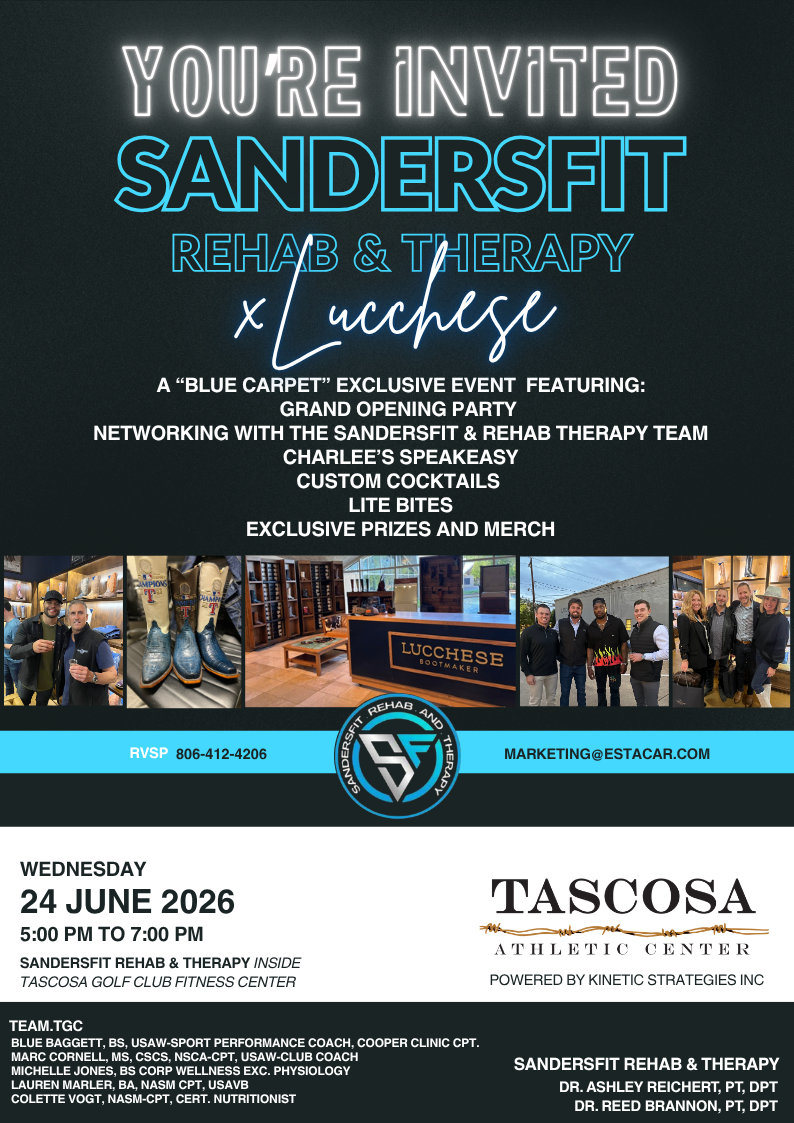
Physical Therapy: Raising the Standard with Sanders Fit & Rehab Therapy
The addition of Sanders Fit & Rehab Therapy brings a new level of depth and expertise to the recovery model. Recently joining from the Dallas-Fort Worth area, SFRT comes with a background of working with elite athletes and high-performing individuals who demand consistency from their bodies.
This connection was built through trusted relationships, including Blue Baggett and ties to Matrix Orthopedics, reinforcing a shared commitment to quality care and performance-driven outcomes.
For Cori, this is also personal. Having grown up in Dallas and continuing to work with clients in that environment, she has experienced firsthand what high-level, integrated wellness looks like—and has made it a priority to bring that same standard into the community.
SFRT represents that next step.
Their approach goes beyond traditional physical therapy, focusing on the intersection of rehabilitation, performance, and long-term durability. It’s not just about addressing pain—it’s about understanding why it exists and how to build a system that supports the body moving forward.
This includes:
Identifying movement inefficiencies before they become injuries
Improving mobility, stability, and coordination
Bridging the gap between rehab and performance training
Supporting individuals who expect more from their bodies
By bringing this level of care into the fitness environment, recovery becomes more immediate, more accessible, and more effective.
It becomes part of the routine—not a last resort.
Recovery, Performance, and Community
When recovery becomes consistent, it naturally becomes part of a culture.
It creates space not only for physical restoration, but for connection—a shared understanding that taking care of your body is not indulgent, it’s necessary.
This balance between performance and play is what makes an active lifestyle sustainable.
Because long-term success is not built on intensity alone.It’s built on consistency, enjoyment, and the ability to keep showing up.
The Takeaway
Recovery is often overlooked because it doesn’t feel as immediate as training. But it is the process that determines whether the body improves, maintains, or breaks down over time.
When recovery is thoughtfully integrated—supported by the right people, the right tools, and the right philosophy—it becomes part of how you live, not something you occasionally do.
Not a luxury.A standard.
And ultimately, the reason you’re able to keep performing, playing, and living well—for the long run.


Comments